

Your Mind Matters
Black women, mental health, and who we turn to when the system turns away.

Warmer temperatures and longer days convince me that spring is really here. May brings Mental Health Awareness Month, and Weatherproof will focus on mental well-being all month long.
Nearly 57 million adults in this country have a mental health condition. Black Americans are no less likely to experience depression, anxiety, and serious psychological distress than their white counterparts. But less likely to get the care they need. The reasons are structural, not personal.

Poverty can lead to or worsen mental health conditions. Food insecurity, housing instability, neighborhood violence, the absence of green space, and safety in your immediate environment directly impact mental health. We cannot talk about what Black women need for mental wellness without naming what the zip code already does.
There are roughly 30 psychiatrists for every 100,000 people in this country, and fewer in Black and low-income communities. Over 150 million Americans live in designated mental health shortage areas. Therapy and mental health care can be so expensive that help seems out of reach. Copays and missed work add up. And added to all this are federal and state cuts to programs that serve many Black and low-income communities.
Even when you find a provider, there can be a real disconnect. Only 4 percent of American psychologists are Black. Studies show that when you have a provider of the same cultural background, you tend to do better.
A 2026 KFF survey found that Black adults are more likely than white adults to turn to AI chatbots for mental health advice. Not because we prefer it. Because of care gaps. And when researchers looked at who actually found that advice helpful, Black respondents were less likely to say it helped. The algorithms were not built for us.
Today, in many Black communities, mental illness is still framed as weakness, as something prayer and willpower alone should handle. And I really like church, but it is not therapy. We’ve had to be strong to survive. But survival is not the same as health. And strength without support will break you.
Money and status can't save you
A UNC Gillings School study found that Black women with disadvantages early in life who went on to get more education or build strong social support had a 37 percent higher risk of depression than those with fewer disadvantages. This finding is in keeping with the research on ACEs (adverse childhood events) that tells us that trauma continues to have an impact on us despite our education or status.
But there is hope and help. Reach out to a provider who sees you. Therapy and medication can help. But other things, like Sister circles can support you as well. Community lowers anxiety, increases belonging, and provides something no chatbot can: the experience of being seen by people who understand. Research tells us that having even one person you can tell the truth to makes a measurable difference. One honest relationship. This is how Black women have survived for centuries. The porch. The church mothers. The kitchen table. The girlfriends.
I am a physician. Medicine trains us to diagnose in others what we suppress in ourselves. For Black women in medicine, it’s worse. We are navigating spaces not built for us while holding the weight of our patients, our families, and our communities. Once I suffered in silence, but now I know that naming the distress is the first step toward healing.
Here are a few places to start if you need support:
The Loveland Foundation — thelovelandfoundation.org — therapy vouchers specifically for Black women and girls
Therapy for Black Girls — therapyforblackgirls.com — therapist directory, podcast, and community
Open Path Collective — openpathcollective.org — sliding scale therapy, $30-$80 per session
988 Suicide and Crisis Lifeline — 988lifeline.org — call or text 988, available 24/7
WRITING DESK
I am fine. She is fine. We are doing fine. This is what we say when we don’t want to go deeper. Fine is a closed door.
Today, I want to invite you to write behind the word fine. Not for anyone else. Just for yourself.
What are you carrying right now? What is still sitting in your body, unspoken, that you have been calling fine?
You do not have to share it. You do not have to turn it into anything. Write it down.
ODDS & ENDS
I am recommending Christina Sharpe’s Ordinary Notes. A book about grief, Blackness, and what the interior life costs. Written in fragments short enough to read while doing all the things.
Last weekend, I performed in Listen To Your Mother. I told a five-minute story on stage in front of a few hundred people about my mother. As adults, we don't take risks as much as we did when we were children, and standing on that stage was risky! But it felt great to share a little piece of who my mother was to me. I’ll share the video clip once I have it.
Mother’s Day is Sunday. Not all of us hold this day the same way. For me, the day feels kind of gray as I really miss my mother and grandmother, and it seems as if everyone else has theirs (not true, but still). And you know what? That’s okay to be sad and to remember.
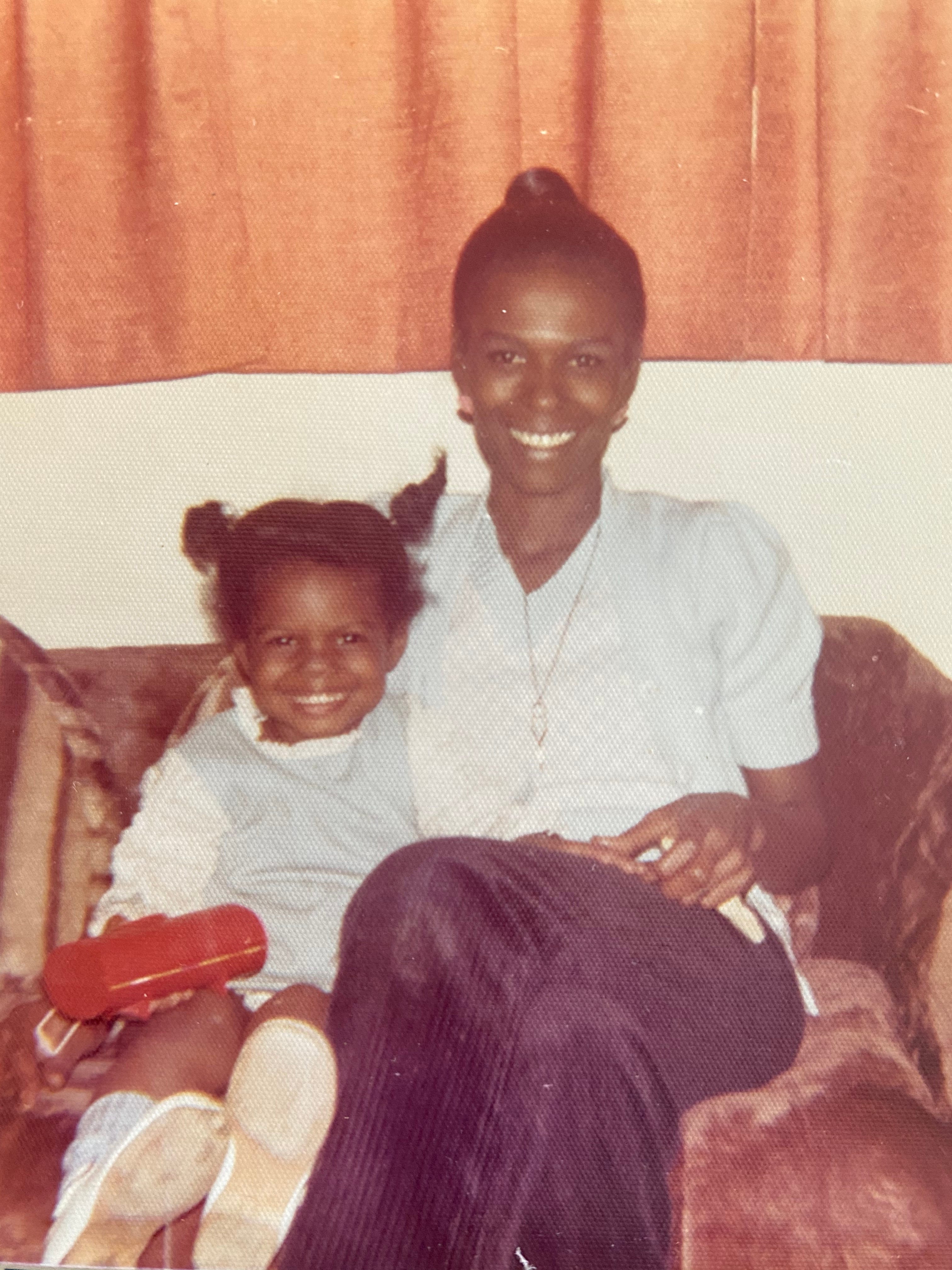
If your mother is your first call, the person who shows up, hold her close this weekend. Tell her. Give her her flowers now.
And if your relationship with your mother is complicated, painful, or marked by absence, you do what feels right to you.
Some of us have been mothered by aunts, grandmothers, teachers, older women who slipped us something when we needed it. Some of us have done that for others without the title. That counts. All of it counts. This weekend is a good time to honor whoever played that role in your life, and to recognize the ways you have played it for someone else.
REFERENCES
4. APA Services. New Policies Affecting Access to Mental Health Care. 2026.
5. Geronimus AT, et al. Weathering and age patterns of allostatic load scores among Blacks and whites in the United States. Am J Public Health. 2006;96(5):826-833.
6. Miami Times. How sister circles help Black women thrive. May 2026.
.