

Roots to Stand on and Withstand Storms
Cultivating Spiritual and Ancestry Memory & Connections

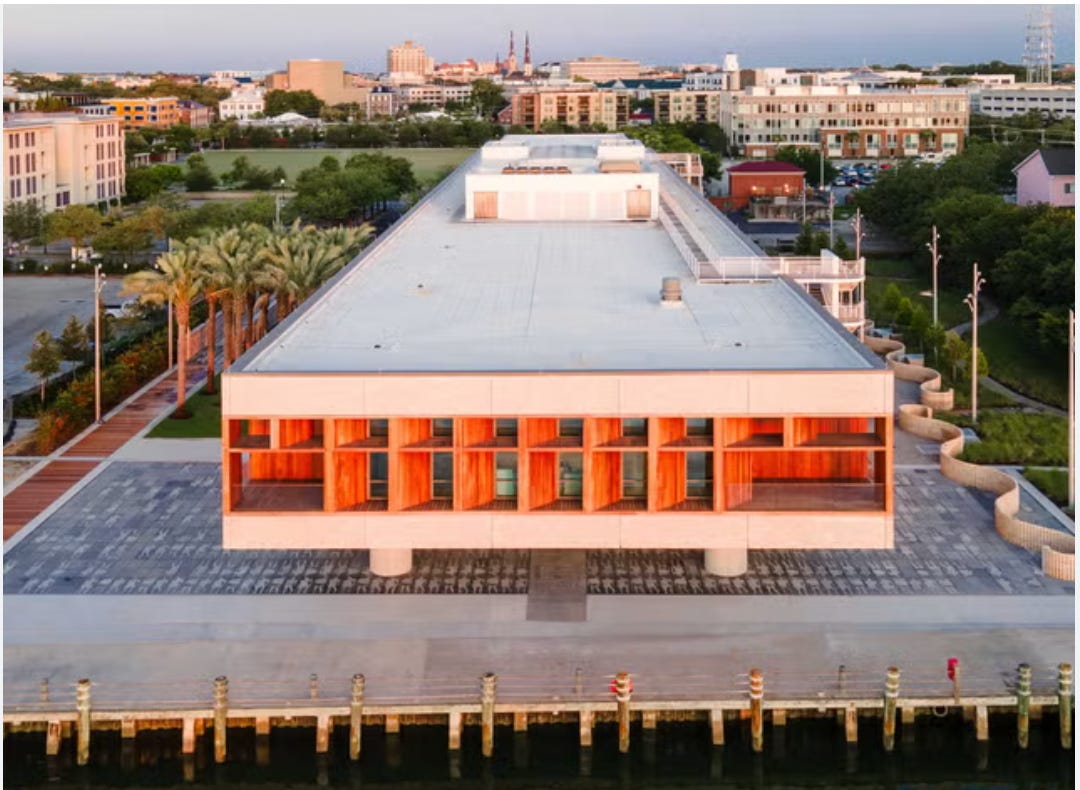
A few weeks ago, I visited the International African American Museum in Charleston, South Carolina. For me, the most sobering exhibit was outside—the museum is located near the site of Gadsden’s Wharf, where nearly half of all enslaved Africans brought to this country first touched American soil. There’s a reflecting-pool-like installation with carved forms reminiscent of bodies packed in slave ships.
Inside the museum, I was uplifted by the countless examples of how Black people in this country have survived, struggled, and even triumphed despite all the collective forces arrayed against us. The reminder of our ancestors’ courage and fortitude gave me strength for today, especially given our current sociopolitical climate, where historical facts and symbols face erasure.
The Medicine of Memory
How is this related to weathering and health? History gives us context for many of the structural forces that still exist today—forces that prematurely age us and make us more vulnerable to chronic diseases. Understanding where we come from helps us make sense of where we are and where we’re going.
Research shows that cultural identity and spiritual connection serve as protective factors against the weathering effects of chronic stress. When we connect with our ancestral roots—whether through museum visits, family stories, genealogy research, or community gatherings—we tap into a legacy of survival.
As both a physician and writer, I’ve learned that stories are medicine. When I write to my brother Monir in my forthcoming memoir Brother Epistles—letters to him three decades after he was killed in a drive-by shooting—I’m doing more than processing grief. I’m documenting history, bearing witness, and insisting that his life mattered. Memory becomes an act of resistance. Storytelling becomes a form of healing.
For writers and storytellers among us, knowing our history—both personal and collective—is essential to our craft. We cannot write authentically about our present without understanding our past. The stories we carry, the family narratives passed down, the historical context of our communities—these become the rich soil from which our best work grows.
Reflecting on and knowing our history can be a wellspring of strength, courage, and resilience. Every time we choose nourishing foods over convenience, movement over sedentary habits, rest over exhaustion, or boundaries over people-pleasing, we honor what our ancestors fought for. Self-care becomes a form of honoring those who came before.
This Week’s Challenge
Document one family story this week. Call an elder, dig through old photos, or write down a memory before it fades. These stories are your inheritance and your material.
Odds & Ends
I’m recommending Kindred by Octavia Butler this week—a masterful exploration of how the past reaches into the present, demanding we reckon with history’s grip on our bodies and souls.
Rest in Power: D’Angelo, whose song “How Does It Feel” remains a classic slowjam.
Next week: A roundup of all seven weatherproofing pillars as we head into the holidays.
On October 28, I will be a part of Friends & Features: Meet the Memoirists, reading virtually alongside the wonderful Melissa Febos, National Book Critics Circle Award winner. Join us to hear me read from my debut, Brother Epistles, coming in June 2026.
References and Further Reading:
Musgrave CF, Allen CE, Allen GJ. Spirituality and health for women of color. Am J Public Health. 2002;92(4):557-560.
Mattis JS. Religion and spirituality in the meaning-making and coping experiences of African American women: a qualitative analysis. Psychol Women Q. 2002;26(4):309-321.
Debnam KJ, Milam AJ, Furr-Holden CD, Bradshaw C. Role of stress, religiosity, and social support on depressive symptoms among African American adolescents. J Adolesc Health. 2012;51(6):545-551.
Jones VN, Hall GCN. Mind, body, and spirit: a constructivist grounded theory study of wellness among middle-class Black women. Qual Health Res. 2024;34(3):318-333.
Utsey SO, Bolden MA, Lanier Y, Williams O. Examining the role of culture-specific coping as a predictor of resilient outcomes in African Americans from high-risk urban communities. J Black Psychol. 2007;33(1):75-93.
Johnson VE, Carter RT. Black cultural strengths and psychosocial well-being: an empirical analysis with Black American adults. J Black Psychol. 2020;46(1):55-85.
Sellers RM, Caldwell CH, Schmeelk-Cone KH, Zimmerman MA. Racial identity, racial discrimination, perceived stress, and psychological distress among African American young adults. J Health Soc Behav. 2003;44(3):302-317.
I LOVE Kindred! Great newsletter as always!
“Memory becomes an act of resistance. Storytelling becomes a form of healing.” Gorgeous words, great post!