

Hidden Until Its Not
Intimate and Domestic Violence, Black Women, and Silence

Last week, two families suffered immeasurable loss because of intimate partner Cerina Fairfax was a dentist, a mother, a woman who had installed security cameras in her own home because she was afraid. Her husband shot and killed her in their home in Annandale, Virginia. In Shreveport, Louisiana, a man shot and killed eight children, seven of them his own, ranging in age from three to eleven. Their mother survived, critically injured. But already, the news cycle has moved on.
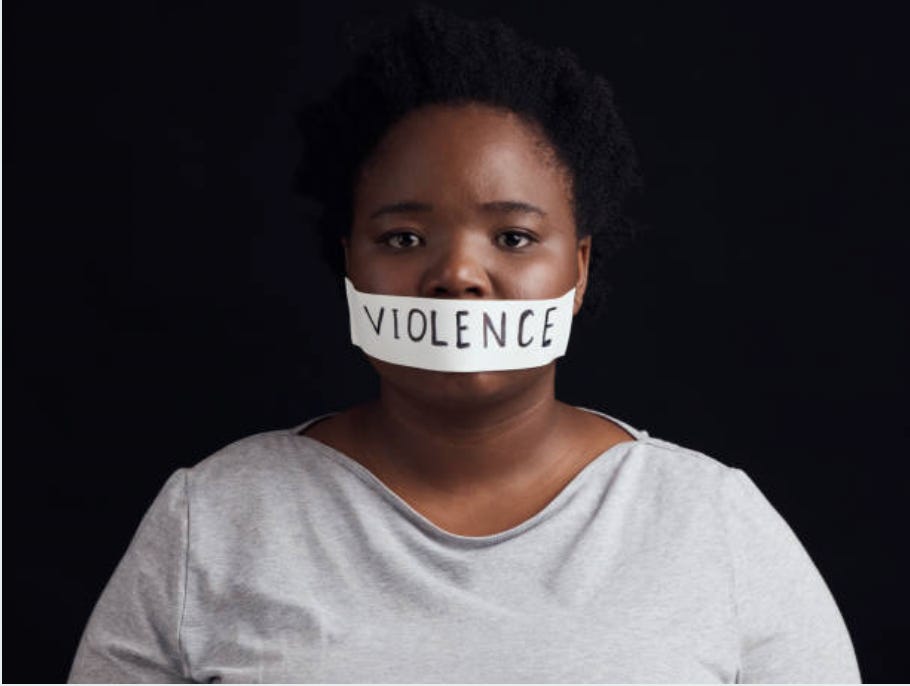
Intimate partner violence shows up in every zip code, every income level, every household. But Black women suffer intimate partner violence at a rate 35 percent higher than white women. We are more likely to be murdered by an intimate partner. We are less likely to be believed when we report it, and less likely to have access to shelter and resources to leave. This reflects a failure in structures to protect women, Black women in particular.
While I was in college, my sorority volunteered at a shelter for women and children affected by domestic violence. We hosted Christmas gift drives and parties. We tried to make things feel a little normal.
I was twenty years old. I had never been inside a shelter before. I remember the children most. They ran toward the presents. They laughed. The mothers flashed small smiles at seeing the joy of their children and feeling safe for a moment.
I have never forgotten that. Staying safe requires support. Somewhere to go, a shelter bed that is actually available, and a protective order that is enforced. A system that believes you.
If you are in danger or know someone who is: the National Domestic Violence Hotline is available 24 hours a day at 1-800-799-7233, by text at 88788, and at thehotline.org.
Notes from Writing Desk
There is a difference between writing for healing and writing literature.
Journaling and expressive writing have real value. Decades of research show that putting traumatic experiences into words can help the body process what the mind cannot hold on its own.
But that is not what Alice Walker did when she wrote The Color Purple. Although the content was inspired by the lived experiences of her ancestors in Georgia. Walker made formal choices. She chose the epistolary form. She shaped the dialect. Walker revised and crafted. What transforms difficult material into literature was the act of shaping it. Walker decided what stayed and what went. She wrote what the reader needs to feel in order to understand. That is craft.
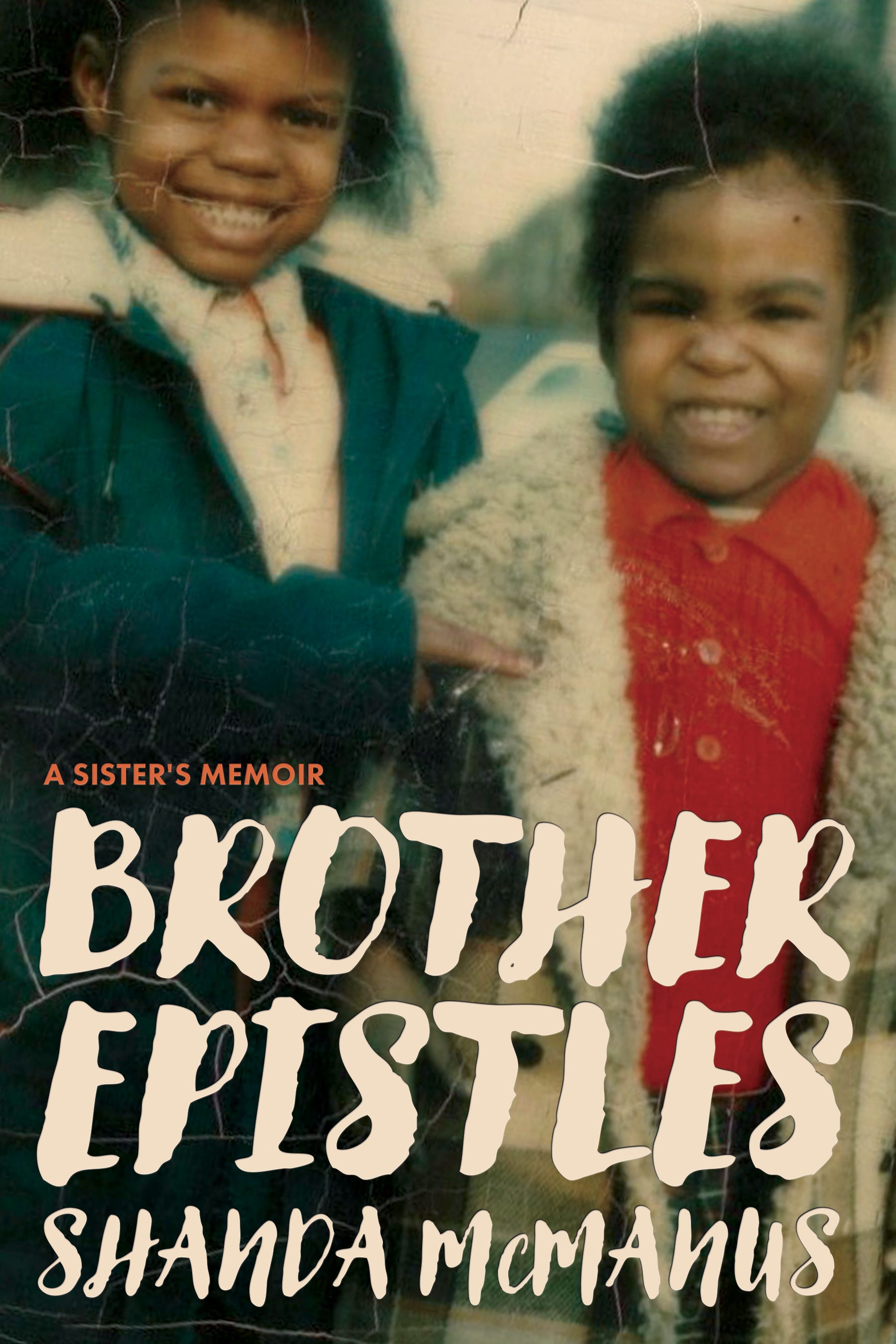
I had to practice craft while writing my own work, Brother Epistles. Writing the book was not a therapeutic exercise. Although I found myself more healed at the end of the process, I had to approach the work as an artist, cutting and shaping relentlessly.
If you are writing about something difficult, first be honest about where you are with the subject. Ask do I need to do some private healing first before I share this story. Then when you are ready to write for an audience, allow yourself to write without a reader in mind. Then come back and ask: what is the shape of this? What does the reader need to know? What have I made? What I am trying to say?
What is the difference between the draft you wrote for yourself and the one you would share?
Odds & Ends
My book recommendation this week is The Color Purple by Alice Walker. I’m still low-key amazed that Sister Margaret Riley assigned my class the book in tenth grade and took us to see the movie! If you have not read it, read it now, and if you have, read it again. Sometimes, the books we revisit as we age give us something new.
The last couple of weeks, I’ve tried to make time for spring cleaning, or what seems like, in my case, spring decluttering. What to keep? Where to put things? Check out some tips here, my personal favorite is listening to old school jams while I work.
Two months from today, June 23, Brother Epistles: a sister's memoir publishes! I have been busy gearing up for the launch. Preorders are now open!
References & Further Reading:
Black MC, et al. National Intimate Partner and Sexual Violence Survey. CDC; 2011.
Petrosky E, et al. Racial and ethnic differences in homicides of adult women and the role of intimate partner violence. MMWR. 2017;66(28):741–746.
Pennebaker JW, Beall SK. Confronting a traumatic event: toward an understanding of inhibition and disease. J Abnorm Psychol. 1986;95(3):274–281.
Campbell JC, et al. Risk factors for femicide in abusive relationships. Am J Public Health. 2003;93(7):1089–1097.
Stockman JK, Hayashi H, Campbell JC. Intimate partner violence and its health impact on ethnic minority women. J Womens Health. 2015;24(1):62–79.